
Dental implants
A considered plan for missing teeth.
An implant replaces a missing tooth root and can support a replacement tooth or teeth. The starting point is an assessment of your health, gums, bone and what you would like treatment to achieve.
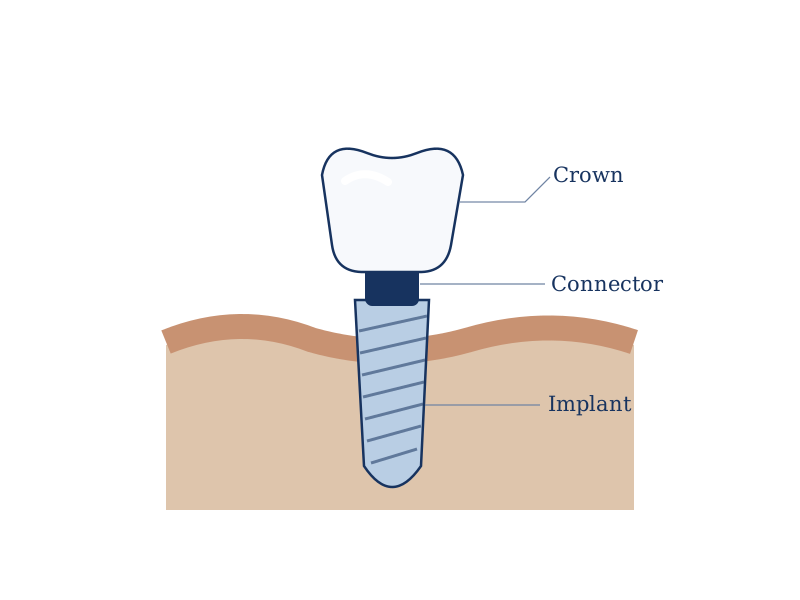
A treatment plan built around you
Your dentist examines your mouth, reviews your medical history and discusses any imaging needed for planning. The number and position of missing teeth, available bone and gum health influence the options. Some people need additional treatment before implants can be considered.
Treatment happens in stages
Planning is followed by implant placement when appropriate. A period of healing allows the implant and bone to integrate. The replacement tooth or teeth are fitted according to that healing and your treatment plan. The process can take several months.
Temporary teeth and the final restoration
A temporary restoration may be used during treatment. Same-day temporaries depend on your assessment, the procedure and clinical conditions; they are not a promise of same-day final teeth. Your dentist will explain whether a fixed or removable option is appropriate.
Benefits, limitations and alternatives
Implants can support replacement teeth without relying on neighbouring teeth in some situations. They require surgery, maintenance and follow-up, and may not be appropriate for everyone. Alternatives can include a bridge, removable denture or leaving the space, depending on your needs.
Risks and ongoing care
Possible complications include pain, swelling, bleeding, infection, injury to nearby structures and failure of the implant to integrate. Gum and bone problems can develop around an implant later. Individual risks, cleaning and review visits should be discussed before deciding.
What treatment can involve
Every plan is individual. This outline shows how the stages commonly fit together; your dentist will confirm what applies to you.
Consultation and examination
You discuss your concerns, health history and medications, and your dentist examines your teeth, gums and bite. This is also the time to talk about what you would like treatment to achieve.
Imaging and planning
X-rays or other imaging may be recommended to assess bone and nearby structures. Your dentist then explains the options, the likely sequence of visits and a written estimate before you decide.
Implant placement
When an implant is appropriate, it is placed in the jaw at a planned visit. Your dentist will explain the anaesthesia and comfort options that apply to you and what to arrange for the day.
Healing and review
The implant and surrounding bone need time to integrate, often several months. A temporary restoration may be worn during this stage, and review visits check how healing is progressing.
The final restoration
Once healing is confirmed, the replacement tooth or teeth are made and fitted, and the bite is checked and adjusted.
Ongoing maintenance
Implants need daily cleaning and regular professional review, just as natural teeth do. Your dentist will recommend a schedule that fits your situation.
When to contact the clinic after implant treatment
- Bleeding that does not settle with the measures you were shown
- Pain or swelling that increases after the first few days instead of easing
- Fever, a bad taste or discharge around the area
- An implant, healing cap or temporary restoration that feels loose
- Numbness or tingling that does not wear off as expected
Follow the written instructions from your treating dentist first. If you have difficulty breathing or swallowing, uncontrolled bleeding or another medical emergency, call 911 or go to the nearest emergency department.
Common questions
Am I a candidate for an implant?
A clinical assessment is needed. General health, medications, gum health, bone, smoking and other factors can affect suitability and healing.
Will I leave with teeth on the same day?
A same-day temporary may be possible for suitable cases. It cannot be confirmed from a website or before assessment, and a temporary is different from the final restoration.
How long do implants last?
There is no guaranteed lifespan. Health, home care, follow-up and mechanical or biological complications affect how long an implant and its restoration function.
Does implant placement hurt?
The area is numbed for the procedure. Some soreness, swelling or bruising afterwards is common and usually settles over several days. Your dentist will explain how to manage discomfort and what is expected in your case.
What does implant treatment cost?
Fees depend on the number of implants, any additional procedures, the type of restoration and the visits involved. You will receive an individual written estimate after your assessment. This website does not list prices.