
In-house dental lab
Made with the next stage in mind.
Our in-house dental lab supports the preparation of temporary restorations as part of your treatment plan. For suitable cases, a temporary tooth or teeth may be fitted on the day of treatment.
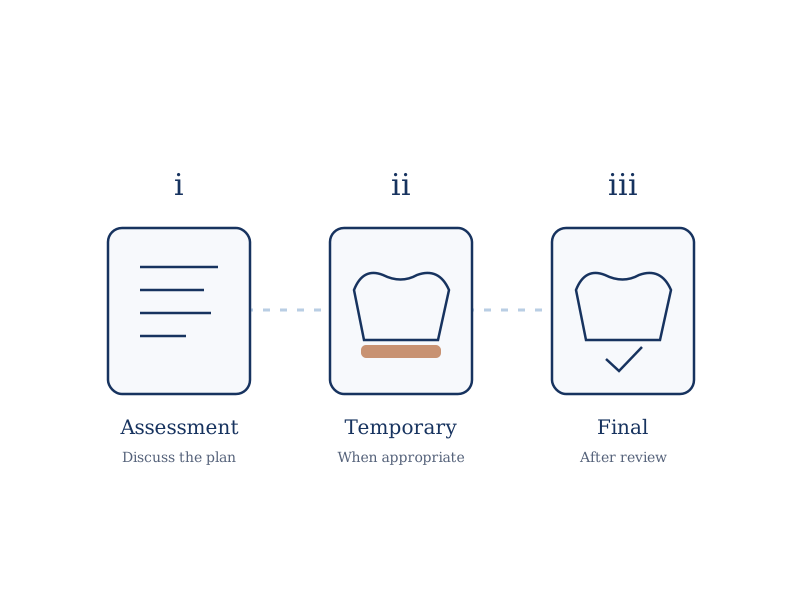
A closer connection between planning and making
An in-house lab brings part of the restorative workflow into the clinic. The dentist and lab can coordinate the design and preparation of a temporary restoration within the individual treatment plan.
What “same-day temporary” means
It means a provisional restoration may be fitted at the treatment visit when clinical conditions allow. It does not mean that all treatment is finished that day, that every person is eligible, or that a fixed implant-supported restoration is always possible.
Healing can change the fit
Gums and supporting tissues change as they heal. A temporary restoration may need adjustments, and your dentist may give specific guidance about cleaning, eating and use. The final restoration follows assessment of healing and the longer-term plan.
Choose the right approach for your case
Ask which type of temporary is proposed, whether it is fixed or removable, what happens if it cannot be fitted that day, and what later appointments and costs are involved. These details should be clear before treatment begins.
How a temporary restoration comes together
Every plan is individual. This outline shows how the stages commonly fit together; your dentist will confirm what applies to you.
Records
Your dentist gathers the records needed to plan the temporary, such as impressions or scans, photographs and bite information.
Design
The dentist and lab plan the shape, fit and material of the temporary around your treatment plan and how the area is expected to heal.
Making the temporary
The temporary is prepared in the lab ahead of, or during, your treatment visit, depending on the case.
Fitting and adjustment
The temporary is tried in, and the fit and bite are checked and adjusted. If it cannot be fitted that day, your dentist will explain the alternative.
Review and the final restoration
Follow-up visits check comfort and healing. The final restoration is planned and made separately once your dentist confirms the area is ready.
When to contact the clinic about a temporary
- The temporary feels loose, has come off or has broken
- A sore spot or rubbing that does not settle
- Your bite feels uneven or you are avoiding chewing on that side
- Pain, swelling or bleeding that increases instead of easing
Follow the written instructions from your treating dentist first. If you have difficulty breathing or swallowing, uncontrolled bleeding or another medical emergency, call 911 or go to the nearest emergency department.
Common questions
Are temporary teeth the final teeth?
No. A temporary supports an interim stage of care. A final restoration is planned separately after the relevant review and healing.
Does an in-house lab guarantee same-day teeth?
No. Having a lab onsite supports the workflow, but clinical suitability and the agreed treatment plan determine what can be delivered.
How long will I wear a temporary?
It depends on healing and your treatment plan, and can range from weeks to several months. Your dentist will give you an expected timeline and update it at review visits.
How do I look after a temporary?
Follow the cleaning and eating guidance you are given. Temporaries are not as strong as final restorations, so your dentist may suggest avoiding hard or sticky foods.